Installation Features Options Retailers FAQ  

Installation Instructions Common ApplicationsPrintable Instructions


Detailed RV7 Pro Plug Installation Instructions


Mounting Pro Plug to Your Vehicle- No Holes Method


Pro Plug utilizes a 3M VHB (Very High Bond) adhesive pad which when properly installed can support well over ½ ton of weight.

  • Mounting surface must be flat enough for complete pad contact without distorting the Pro Plug case.
  • Mounting surface must be free of contaminates, oil, wax, loose paint, labels, or coatings, etc. Clean surface with alcohol wipe provided.
  • Mounting surface temperature should be above 70 deg. and we strongly suggest warmer to increase initial adhesion strength.
  • Mounting location needs to allow access to covers, wiring entry (see “Using a Rear Knockout” below), and the plug-in socket. Double check before mounting permanently.

 For best results, warm the adhesive pad and the mounting surface with a heat gun or hair dryer until it feels warm to touch, this will soften the pad slightly to allow it to conform to the mounting surface better. Remove pad protective paper, position Pro Plug on the mounting surface and strongly press it onto the surface. To seat the adhesive fully, use several raps on the Pro Plug cover with the palm of your hand or a soft mallet near the edges of the covers using a rag for scuff protection. On a slightly concave surface, removing the wiring compartment cover and pushing on the screw in the center of the circuit board will help seat the center of the adhesive pad. Continue with electrical connections.

Mounting Pro Plug to Your Vehicle- Surfaces Not Suited For Adhesive Only   


            This mounting method can be used on a flat surface that has too much texture and/or contamination for the 3M VHB adhesive to work properly.

  • Mounting surface must be flat enough to prevent distortion of Pro Plug case.
  • Mount location needs to allow access to covers, wiring entry (see “Using a Rear Knockout” below), and the plug-in socket. Double check before mounting permanently.

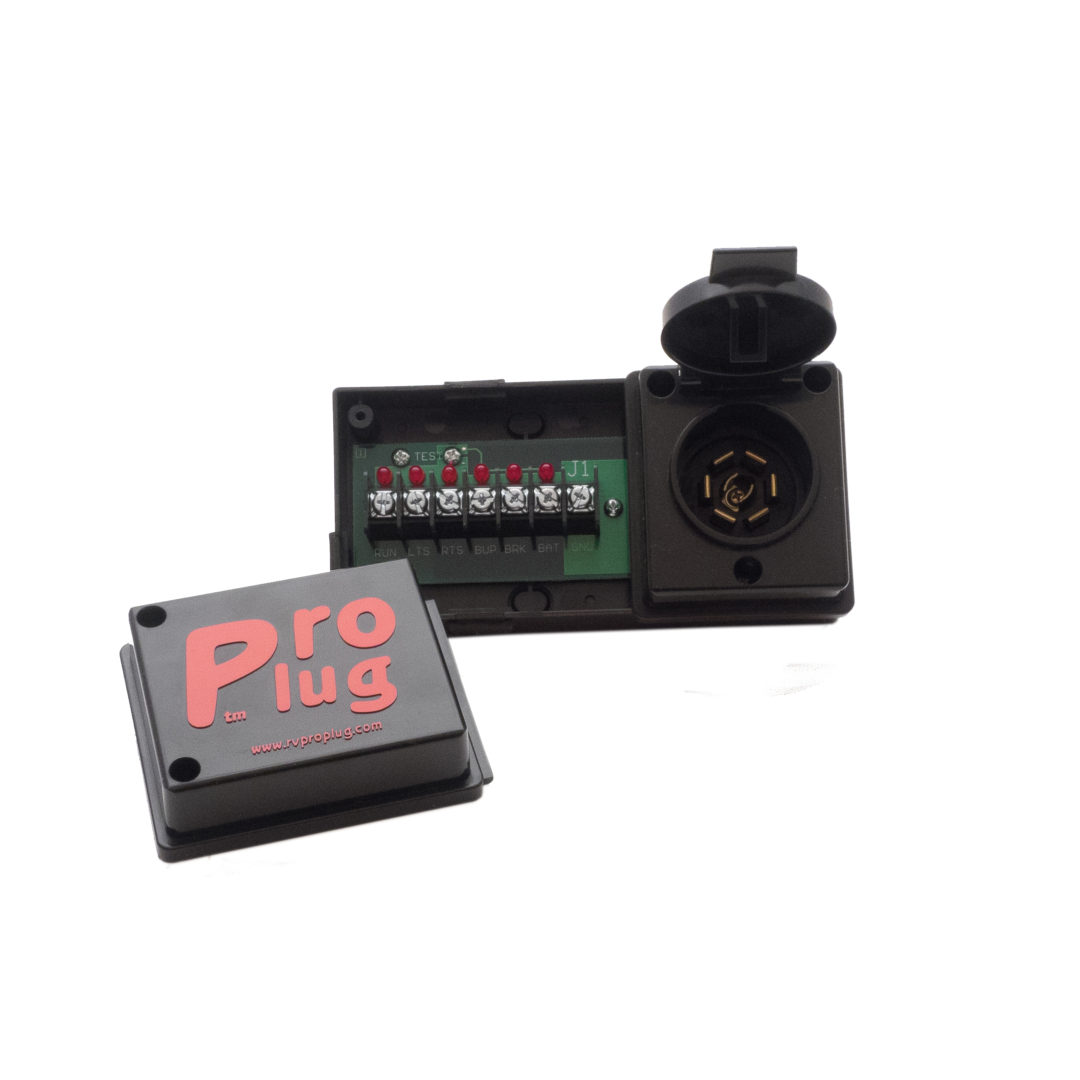
Remove the wiring compartment cover from Pro Plug (2 Screws), then, remove the receptacle cover (3 Screws). Looking from the inside, in  the back of the Pro Plug case, there are 6 locations marked by indentations in which to install screws (not provided) no larger than #8 with a thread style to work with the mounting surface. It is recommended that the circuit board be removed (4 screws) before drilling holes or using self-drilling screws to prevent damage from metal shavings.   

Clean mounting surface as well as possible, remove Pro Plug mounting pad protective paper and press Pro Plug onto surface, then install screws through the case back securing it to the mounting surface. Reinstall the receptacle cover and proceed with electrical connections.

Mounting Pro Plug to Your Vehicle Using Optional Mounting Bracket Systems - Click on the "Options" tab for info.

RTA2.5 and RTA2.0 Bracket Systems

DO NOT stick Pro Plug to the mounting plate until the mounting bracket system has been fit and adjusted to the hitch tube on the vehicle.


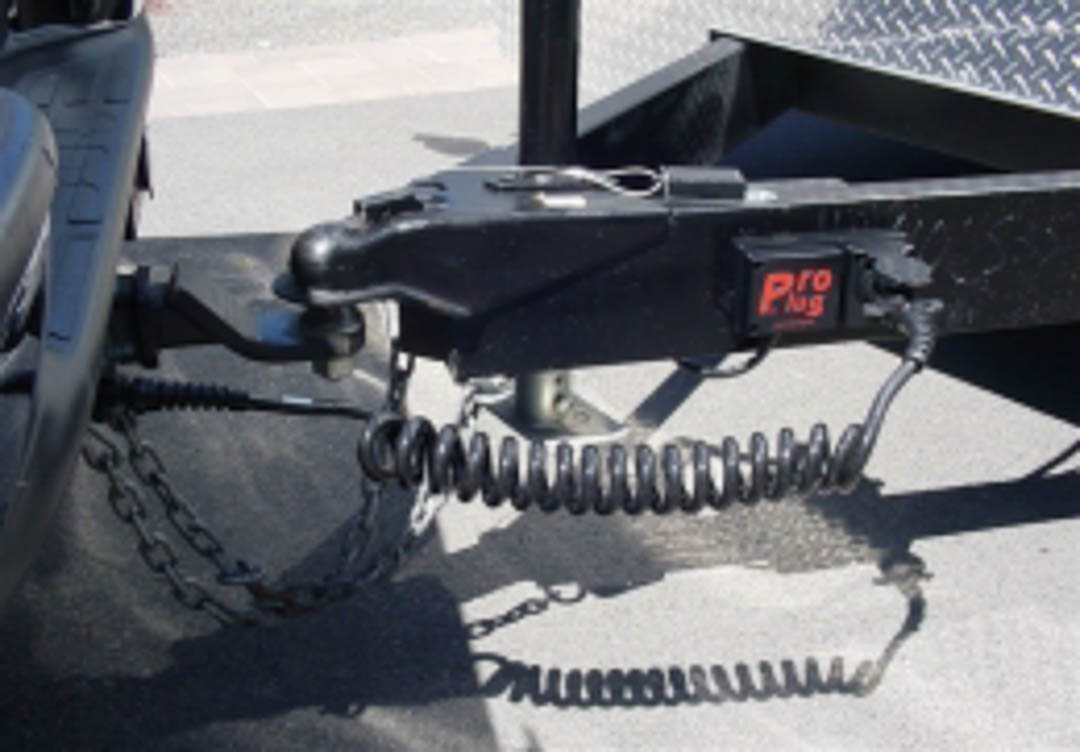
This bracket system is designed to install on a round tube hitch cross bar with 4 to 6" of the tube relatively parallel with the back of the vehicle. If possible, choose a mounting location for Pro Plug away from the center line of the trailer ball by 6-10", the closer the connector is mounted in line with the trailer ball, the more likely to be damaged by a trailer tongue when backing up.


If possible, choose a mounting location for Pro Plug that is naturally protected, connectors that hang down and are the lowest point on the rear of a vehicle are very likely to get torn off or damaged. One of the major advantages of Pro Plug Products is the ability to mount a 7 way connector in a much less vulnerable location on the tow vehicle.


Cut the plastic tie and loosen the band clamps to remove them from the brackets. The brackets and plate are designed with adjustments and offsets and can be reconfigured to work for many different applications. If necessary, remove or loosen the 4 kepnuts that hold the brackets to the plate and reconfigure the brackets to work for your particular application. The brackets should fit squarely on the hitch tube without distorting the plate for adhering Pro Plug and allow easy installation of the band clamps. Double-check the mounting location by holding Pro Plug in place with bracket system to check for interference with bumpers etc. and tighten the bracket kepnuts before proceeding.


Double check the correct orientation of Pro Plug to plate and adhere following Pro Plug instructions.


 Open the band clamps fully and place around the hitch tube and reengage the clamp band into the screw a couple threads. Place Pro Plug and bracket system in place on the hitch tube, slip the band clamps over the feet on the brackets and tighten to hold the connector system in place.


 Proceed with connecting Pro Plug to your vehicle’s electrical system with Pro Plug instructions.


BR5 Ell Bracket  

Mount bracket to bottom surface of vehicle using appropriate screws (3- #10) for the materials it is mounted too. Double check access to covers, wiring entry, and the plug-in connection. Mount Pro Plug to the bracket using the “No Holes Method”.  

Connecting Pro Plug to the Towing Vehicle’s Electrical System

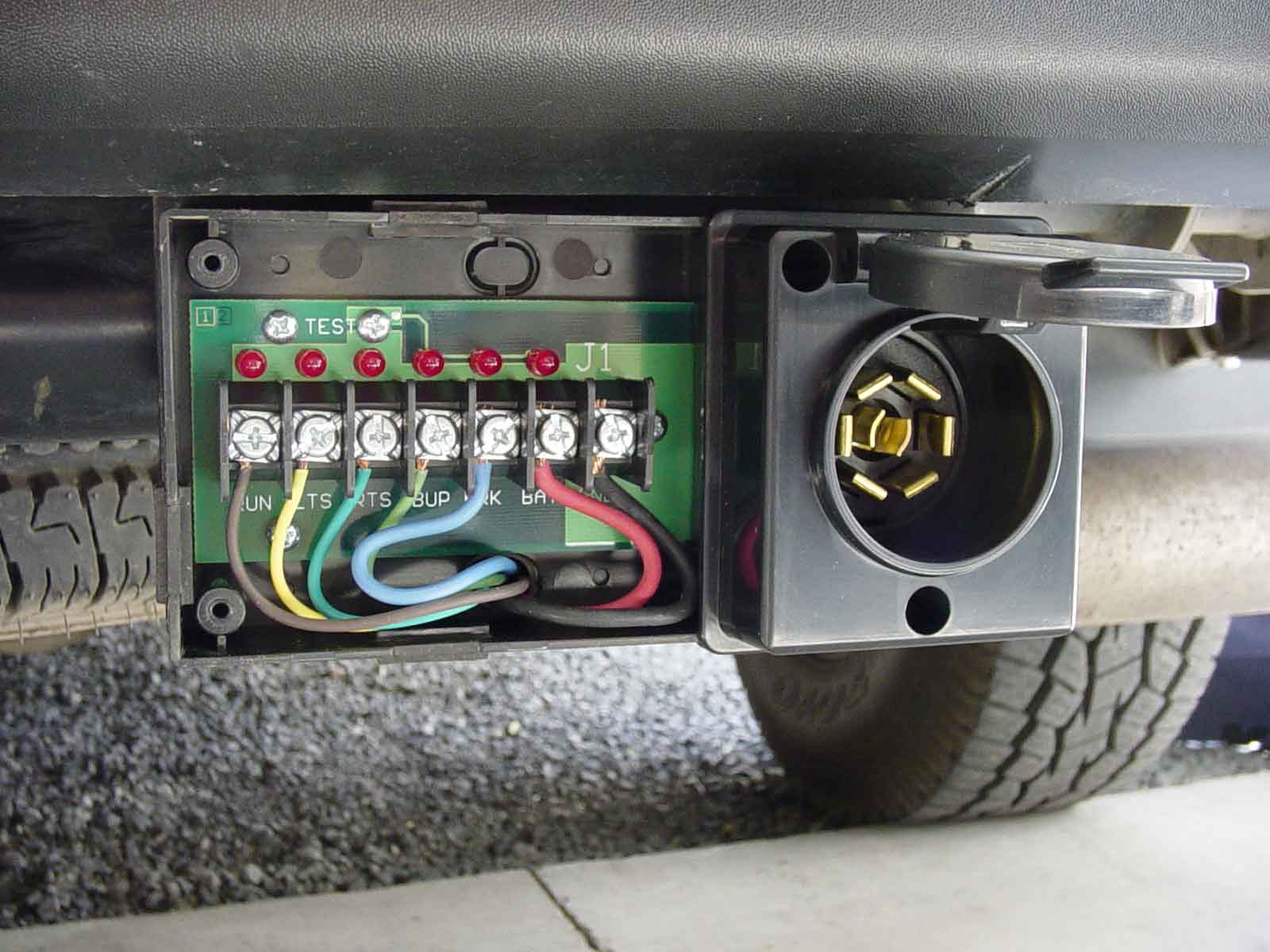
If not done already, remove the wiring compartment cover, it is the one with the Pro Plug logo and attached with 2 screws. This will expose the wiring compartment which holds the terminal strip to connect the vehicle wiring, the LED test indicators, a test screw, (2) knock-outs in the back of the wiring compartment, and will allow removal of the (3) rubber plugs in the side of the compartment.


Wiring Entry Into Pro Plug Wiring Compartment 

Using a Rear Knockout


      There are (2) knockouts in the back of the Pro Plug case, they are easily removed by pushing on one end of the oval with a screwdriver, the other end will pop up and can be pried out of the way, trim any remaining burrs.   

Typically when using rear knockouts for wiring entry, there is already a hole in the mounting surface for the wiring to pass through, perhaps where another style connector was. If a hole is to be drilled in the mounting surface for wiring entry, it is best to drill the hole, route the wiring through it, through the mounting pad and knockout in the back of the Pro Plug case, then stick the Pro Plug case to the mounting surface.

The hole in the adhesive pad is smaller than the knockout hole and works as a grommet for the wiring entering the Pro Plug wiring compartment, the hole can be enlarged if necessary by slitting the sides with a knife.

Using a Side Plug/Grommet

There are (3) possible wire entry locations in the side of the Pro Plug case with rubber plugs. The rubber plugs have a thin center section that can be slit with a knife or cut out completely to become a grommet for the wiring entering the Pro Plug wiring compartment.

Note: It is recommended to cut a small hole it the bottom plug of the wiring compartment to let water drain out for applications where the wiring enters through the top opening or for applications where Pro Plug may be temporarily submerged in water; i.e., boat launching etc.   

      Making the Wiring Connections to Pro Plug

Pro Plug utilizes a high quality barrier type terminal strip to make connections to the towing vehicle wiring. It will accommodate #22 thru #10 gauge stranded wire and #8 gauge can be effectively connected by splitting the stripped end of the wire into two sections and inserting equal amounts of wire on either side of the terminal screw. Use of crimp-on lugs and/or tinning of wires are NOT recommended. 

To make connections, strip about 5/8 inch of insulation from each wire, insert all the strands of the wire under the square washer of the appropriate terminal and tighten the screw.

Hint: if using side entry wiring, be sure to place grommet over the wiring before making connections.


Pro Plug

Function

GM

Ford

Dodge

Trailer

Terminal

Colors

Colors

Colors

Colors

RUN

Tail, Marker Lts

Brown

Brown

Blk w/Yellow
Stripe or Blk

Green


LTS

Left Turn Sgnl

Yellow

Lt Green
w/Or Stripe

Dk Green

Red


RTS

Right Turn Sgnl

Dk Green

Orange
w/Blue Stripe

Brown

Brown


BUP

Backup, Aux

Lt Green

Black
w/Pink Stripe

Violet

Yellow


BRK

Electric Brake

Blue

Blue

BAT

Battery Charge

Red

Black

GND

Ground, Return

White

Black or Gray

Black

White


            Using Pro Plug LED Indicators For Testing the Circuits

            The LEDs (light emitting diodes) in Pro Plug are rated for 16 Volts maximum. Pro Plug should be used only on vehicles with 12 Volt electrical systems.

When properly connected, the LEDs in Pro Plug will provide a quick visual indicator of the presence of an electrical signal at the Pro Plug terminals.  RUN, LTS, and RTS  LEDs should be illuminated whenever those functions are used on the towing vehicle regardless of whether a trailer is connected or not. The BUP, BRK, and BAT LEDs have the potential to be illuminated all of the time and causing unwanted battery drain. They can be switched off after testing by turning the screw to the right of the word “TEST” counterclockwise ½ turn. Turn the test screw in to make contact with the circuit board to activate test when needed.   


     TroubleShooting

None of the LEDs illuminate after connecting Pro Plug.

  • Check for a good ground/return connection to vehicle         
  • Wiring harness not connected to tow vehicle electrical system, or bad connections in tow vehicle wiring.
  • Check towing fuses, many newer vehicles with tow package wiring have separate fuses for the tow harness.

LEDs function normal until the plug-in is used.

  • Check for a good ground/return connection to vehicle
  • Bad connections in tow vehicle wiring 

RUN, LTS, RTS LEDs function normal, BUP, BRK, BAT, LEDs Inoperative.

  • Check “TEST” screw for contact to circuit board.
  • Bad connections in tow vehicle wiring 
  • Check towing fuses, many newer vehicles with tow package wiring have separate fuses for the tow harness.


   © 2010 RV ProPlug
Website Design by Organic Webs